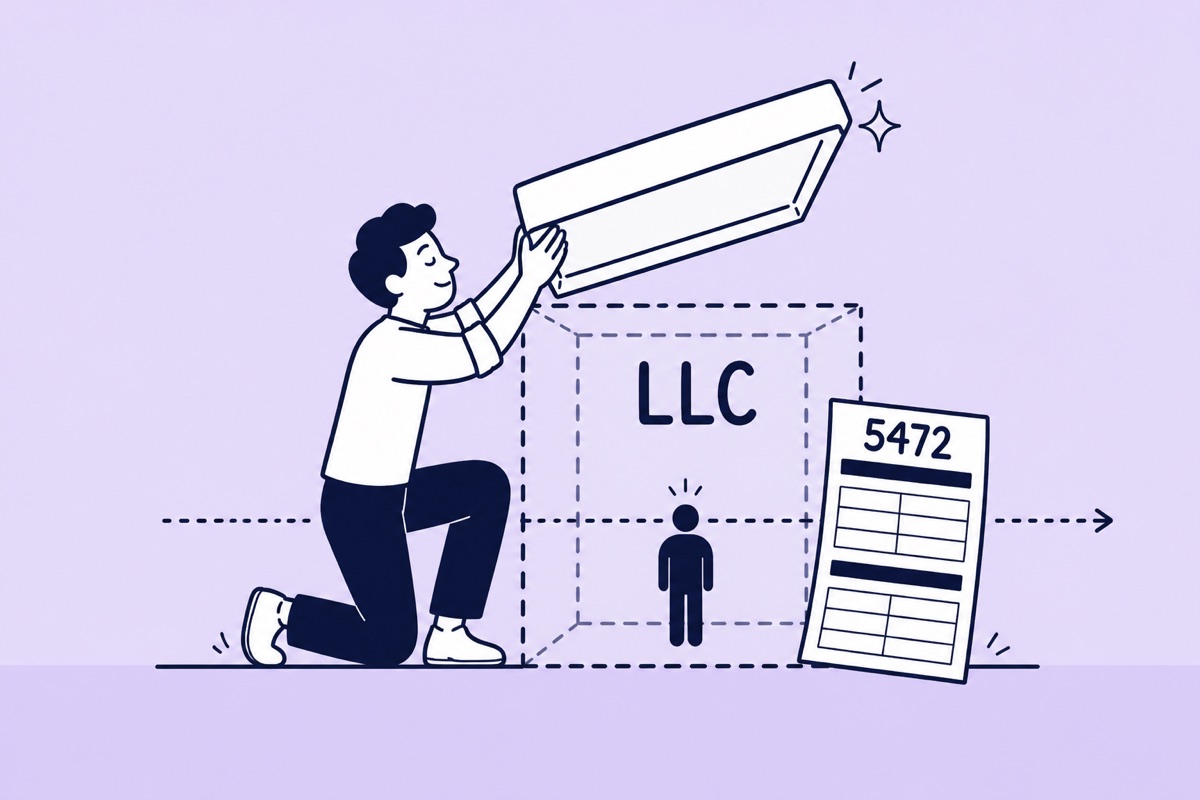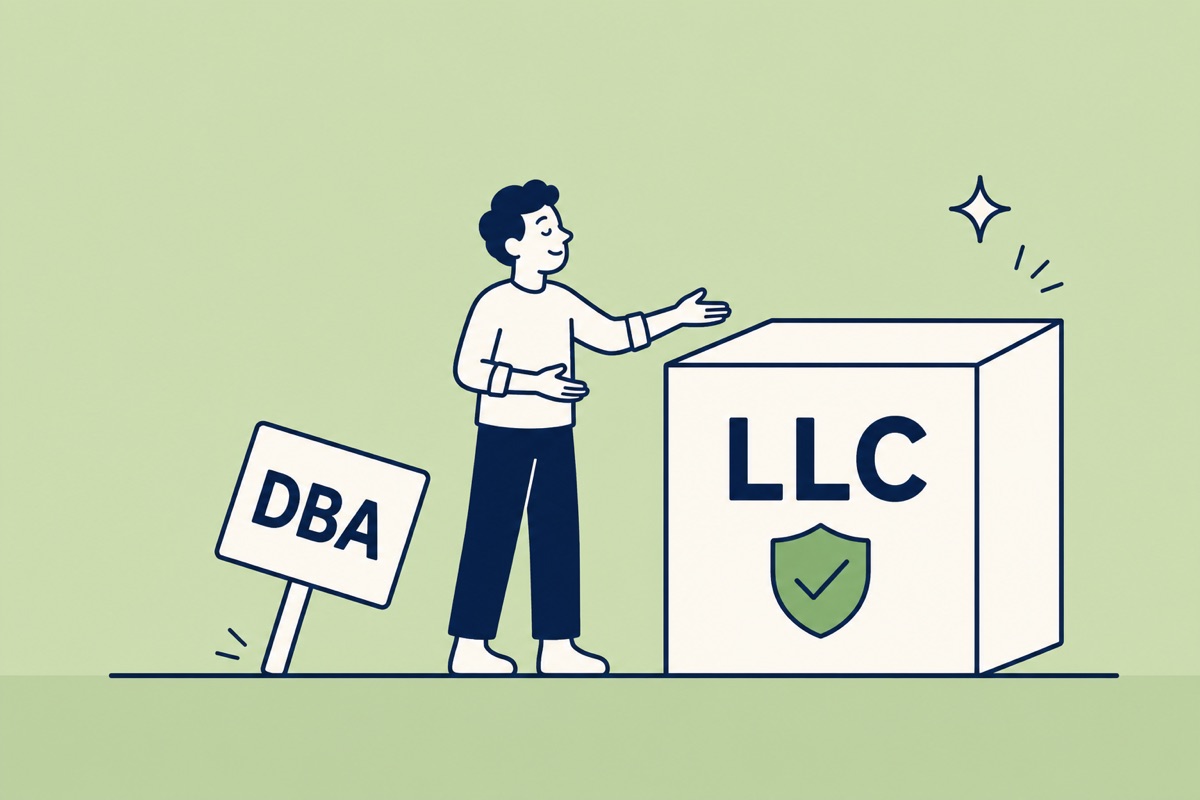
“DBA vs LLC” sounds like a choice between two business structures. It is not. Only one of them is a structure.
An LLC is a legal entity. A DBA is a registered nickname. Comparing them is closer to comparing a company to a brand name than to comparing two company types — and once that clicks, most of the confusion dissolves, including the expensive misconception that a DBA offers any protection at all.
What Each One Actually Is
LLC — a legal entity
A Limited Liability Company is created by filing Articles of Organization with a US state. Once formed, it exists as a separate legal person: it can own property, hold a bank account, sign contracts, sue and be sued in its own name, and hold its own EIN. Critically, it stands between your personal assets and the business’s liabilities.
DBA — a registered trade name
“Doing Business As” — also called a fictitious name, assumed name, or trade namedepending on the state — is a public registration saying “this existing person or entity also trades under this other name.”
It creates nothing. There is no new entity, no new EIN, no separate tax return, and no liability shield. It is a pointer back to whoever registered it.
Side by Side
| LLC | DBA | |
|---|---|---|
| Is it a legal entity? | Yes | No— a name registration only |
| Personal liability protection | Yes — the core reason it exists | None |
| Gets its own EIN | Yes | No — uses the owner’s existing EIN |
| Files its own tax return | Yes (or is disregarded to its owner) | No |
| Can open a bank account in its name | Yes | Only as an alias on the underlying entity’s account |
| Typical cost | State filing fee, plus annual report and registered agent | Roughly $10–$100, renewed periodically |
| Ongoing compliance | Annual report, registered agent, federal filings | Periodic renewal only |
| Name protection | Name reserved within the state of formation | Minimal — and no trademark rights |
| Can you have several? | Yes — each is a separate entity with separate filings | Yes — many DBAs under one LLC, still one filing |
The Liability Difference, Concretely
Two founders each run a consulting business called “Northwind Digital.” A client sues for $80,000.
| Founder A — DBA only | Founder B — LLC (optionally with a DBA) | |
|---|---|---|
| Who is the defendant | The founder, personally | The LLC |
| What is exposed | Personal savings, personal accounts, personal property | The LLC’s assets. Personal assets are generally shielded. |
| Effect of the trade name | None. The name changes nothing about who is liable. | None. The protection comes from the LLC, not the name. |
The trade name is irrelevant to the outcome in both columns. That is the entire point: protection comes from the entity, not from the name.
What This Means If You Are a Non-Resident
For a founder outside the US, the framing of “DBA vs LLC” mostly collapses, because the DBA-only path is not a realistic option.
A DBA must attach to an existing legal person or entity. With no US entity, you would be registering a trade name against yourself, personally— taking on unlimited personal liability for a business operating in a foreign legal system, while typically still needing a US filing presence to register it in the first place. You would gain a name and nothing else.
The LLC is the step that actually accomplishes something: a separate entity, an EIN, the ability to open US banking and accept payments, and liability separation. Our complete guide for non-residents covers that path end to end.
Already have your LLC? The annual IRS filing is the part most owners miss. Form5472.iogenerates your Form 5472 + pro forma 1120 in about 15 minutes — from $147.
Start your filing →When a DBA Genuinely Is Useful (On Top of an LLC)
None of this makes DBAs worthless — it makes them a supplement, not an alternative. Legitimate uses for a foreign-owned LLC:
- Running multiple brands from one entity. “Meridian Holdings LLC” can trade as “SwiftShip” and “PixelForge” without forming and filing for three separate LLCs.
- A customer-facing name that is not your legal name. Useful when the registered name is boring, holding-company-ish, or already taken in your preferred form.
- Testing a new product line before committing to a separate entity.
- A bank or processor requiring the trading name on record before it will accept payments made out to that name.
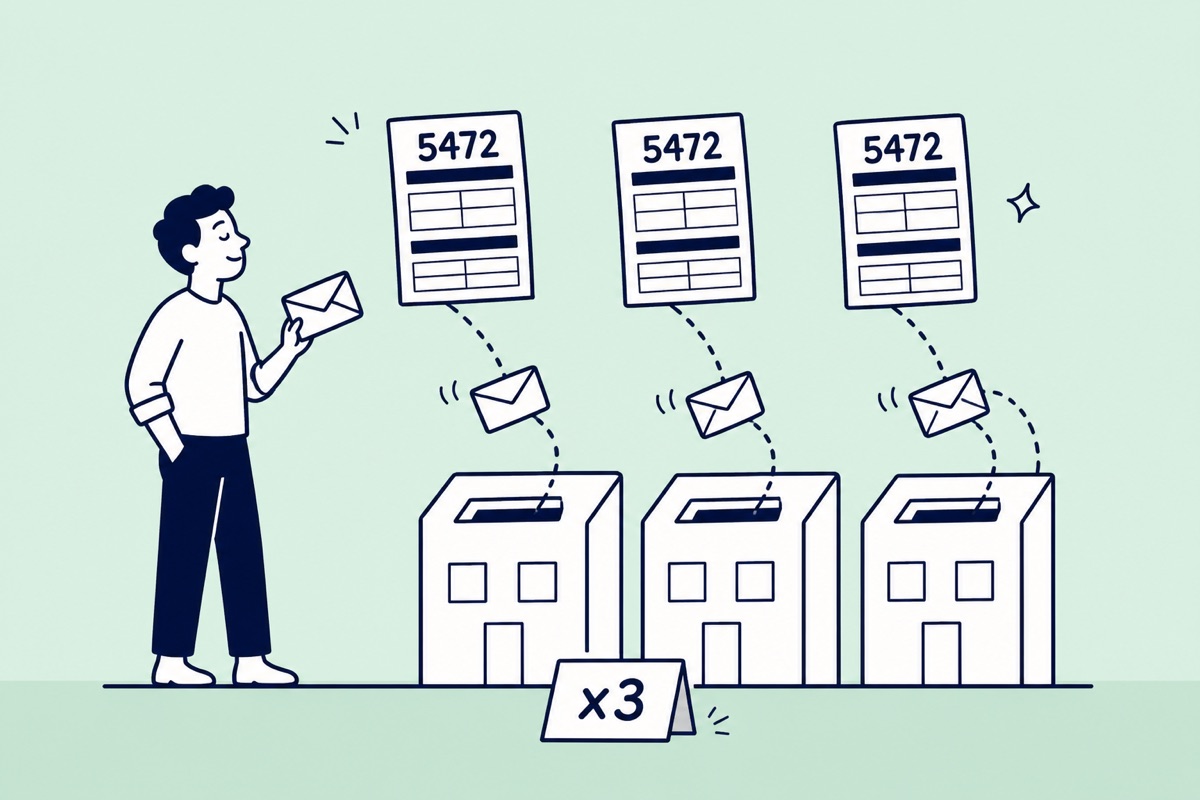
Multiple DBAs vs multiple LLCs — the filing difference. Three DBAs under one LLC means one Form 5472 + pro forma 1120. Three separate LLCs means three complete filings, each with its own $25,000 penalty exposure. See filing Form 5472 for multiple LLCs. DBAs are the cheaper way to run several brands — separate LLCs are the way to genuinely separate liability between them.
How a DBA Affects Your Taxes: It Does Not
A DBA is invisible to the IRS as a taxable entity. Concretely, for a foreign-owned single-member LLC:
- Same EIN. No new application. The trade name simply goes on line 2 of Form SS-4 if you have it at the time of application.
- Same single filing. One Form 5472 with a pro forma Form 1120, however many DBAs exist.
- Same deadline and the same $25,000 penalty exposure.
- Same classification. The LLC remains a disregarded entity. A trade name does not alter tax classification.
Key Takeaways
- An LLC is an entity; a DBA is a name. They are not alternatives.
- A DBA provides zero liability protection. Protection comes from the LLC.
- For a non-resident, a DBA without an LLC accomplishes essentially nothing.
- DBAs are excellent on top of an LLC for running multiple brands under one set of filings.
- A DBA changes nothing about your EIN, your Form 5472, your deadline, or your tax classification.
Frequently Asked Questions
Is a DBA the same as an LLC?
No, and the difference is fundamental.An LLC is a legal entity — it exists separately from you, can own assets, and shields your personal assets from business liabilities. A DBA is only a registered nickname. It creates nothing, owns nothing, and protects nothing. It simply lets an existing person or entity trade under a different name.
Does a DBA give me liability protection?
No.This is the single most expensive misunderstanding about DBAs. If you operate under a DBA without an underlying entity, you are personally liable for every business debt and claim. Liability protection comes from the entity — the LLC — not from the name registration.
Can a non-resident get a DBA without forming an LLC?
In most cases this is impractical and pointless.A DBA has to attach to a legal person or entity, so with no US entity you would be registering a trade name against yourself personally — forfeiting all liability protection and generally still needing a US presence to file. For a non-resident, forming the LLC is the step that actually accomplishes something.
Does adding a DBA change my Form 5472 filing?
No. A DBA does not create a new entity, so there is no new EIN, no second return, and no change to your deadline. Your LLC files exactly one Form 5472 with a pro forma Form 1120 regardless of how many trade names it operates under. Note the contrast with owning several actual LLCs, where each entity files its own return.
Does a DBA protect my business name?
Barely.A DBA registration usually only prevents another business from registering the identical name in that same county or state filing system. It confers no trademark rights, so another company can legally use the same name elsewhere — and can even stop you from using it if they hold a federal trademark. Name protection comes from trademark registration, not a DBA.
Where do I file a DBA for my US LLC?
It depends on the state.Some states handle it centrally through the Secretary of State, while others require filing at the county level where the business operates — and a few require publishing a notice in a local newspaper. Fees typically run from around ten to a hundred dollars, with renewal every few years.
File Your Form 5472 in Minutes
Skip the paperwork. Our digital tool generates IRS-ready Form 5472 and Pro Forma 1120 instantly.
Start Filing Now